The team building self-learning AI for buildings
HomeMind combines product leadership, AI research, embedded electronics, software architecture and reinforcement learning. The team is built around one goal: turning advanced building intelligence into a practical, retrofit-ready product that can work from homes to campuses and commercial buildings.
Autonomous building control needs more than software
HomeMind is not a simple dashboard or analytics layer. To safely control HVAC, PV, battery storage and building systems, the product needs several disciplines working together: building automation, AI modelling, embedded devices, integrations, cloud and edge deployment, cybersecurity and measurable business outcomes.
That is why our team combines practical engineering with AI research and product execution. We are building a system that first learns the building, then validates decisions in shadow mode, and only after that moves to active control.
A compact team covering the full HomeMind stack
From strategy and pilots to AI models, embedded sensing, system architecture and reinforcement learning, each role is directly connected with the core product.

Maciej Puchara
Founder & Lead InnovatorProduct-driven founder combining enterprise software leadership, hands-on engineering and deep understanding of smart building automation. Leads strategy, product vision, pilots, partnerships and fundraising.

Marcin Pietroń
AI ArchitectAcademic AI/ML expert with 70+ scientific publications. Brings deep expertise in machine learning, continual learning and neural network optimization, with prior industry experience at Cadence Design Systems, Samsung and Motorola.

Szymon Czerwiński
Embedded Electronics EngineerEmbedded systems engineer with 6 years of experience in firmware, hardware optimization and sensor-based devices, including work on NCBR-funded R&D projects. Leads hardware selection, sensor strategy and embedded development.

Adam Wójcicki
Software ArchitectSoftware architect with 17 years of development experience and Engineering Manager background at SmartRecruiters. Created the system architecture enabling both local edge deployment and cloud operation.
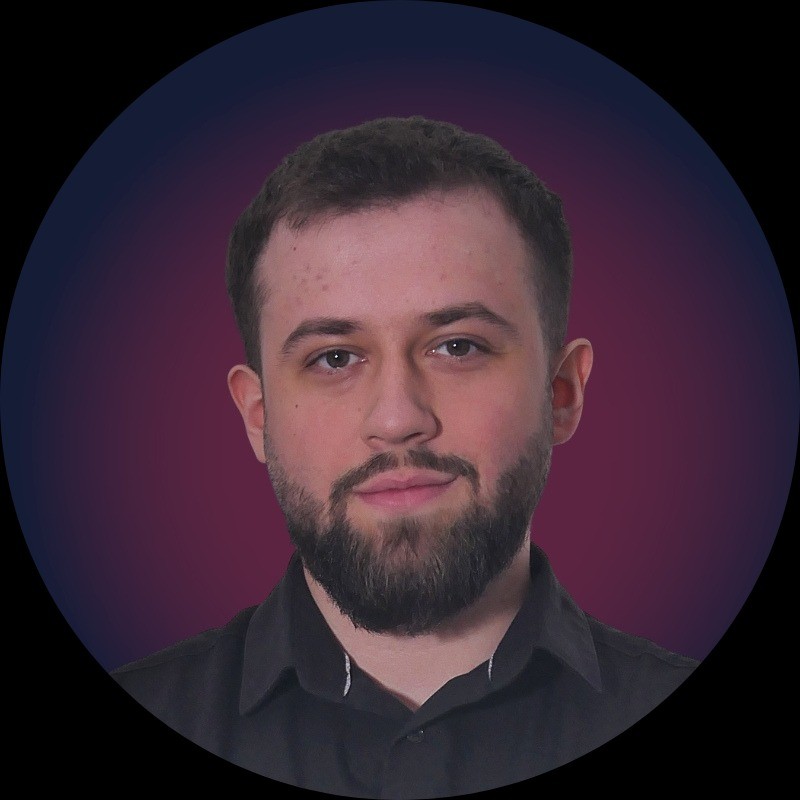
Szymon Piórkowski
Reinforcement Learning EngineerCreated the AI foundation that learns from user interactions and improves performance over time, enabling better comfort control and measurable energy savings.
Built for execution, research depth and real-world deployment
HomeMind is developed by a team that connects scientific AI knowledge, production software experience and practical embedded engineering.
Each discipline maps directly to the product
The team is organized around the actual deployment flow: connect to the building, collect data, learn the system, validate AI decisions and then control safely within defined limits.
This structure reduces the gap between research, prototype and commercial deployment. The same team that builds the AI also understands integrations, sensors, pilots and customer value.
Product and commercial validation
Strategy, pilots, customer conversations, partnerships and fundraising keep the roadmap connected to real building economics.
AI model architecture
Machine learning, continual learning and neural network optimization support a model that improves as building data grows.
Embedded sensing and local hardware
Sensor strategy, firmware and hardware optimization make HomeMind suitable for retrofit deployments and edge operation.
Edge and cloud architecture
The platform can run locally or online, adapting to different security, privacy and IT requirements across buildings.
Reinforcement learning loop
AI learns from user corrections, comfort outcomes and energy data, improving control over time instead of relying only on fixed schedules.
The team is oriented around real buildings, not only simulations
HomeMind is being developed for practical deployment in homes, public buildings, university environments and commercial facilities. The current path combines residential retrofit, university-building validation and commercial building diagnostics.
Residential retrofit
Installer partnership for PV, battery storage and heat pumps in Southern Poland, with a first joint customer installation completed successfully.
University building environment
A university-building validation path is being prepared to test local AI control in a more complex environment, with focus on privacy, data sovereignty, comfort and measurable energy performance.
Commercial buildings
HVAC maintenance partner managing around 10 commercial buildings in Kraków, creating a route to diagnostics, verified savings and recurring licensing.
Talk to the team behind HomeMind
We are looking for building owners, facility managers, HVAC partners, smart home integrators, public-sector pilots and investors interested in autonomous building energy control.
